
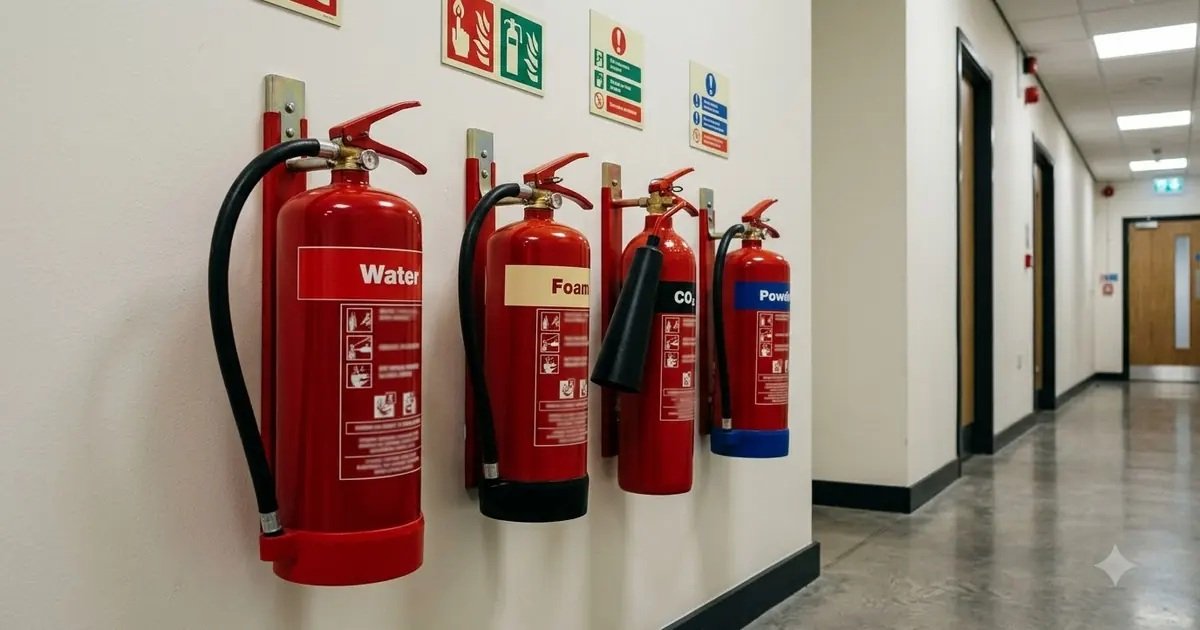
Quick Answer — What Are the Types of Fire Extinguishers?
The 4 main types of fire extinguishers are water (class A), foam (class A and B), dry chemical powder (ABC) and carbon dioxide (CO2) (class B and electrical). A fifth type, wet chemical, is designed for kitchen cooking-oil fires. For an electrical fire use CO2 or dry powder, never water. For a home, an ABC dry powder extinguisher plus a fire blanket is a common starting point. Remember PASS: Pull, Aim, Squeeze, Sweep.
1. How Fire Works and Why Extinguisher Types Differ
A fire needs three things: heat, fuel and oxygen. Modern fire science adds a fourth element, the chemical chain reaction, which together form the fire tetrahedron. Every extinguisher works by removing one of these elements. That is why there are several types of fire extinguishers and why choosing the correct one matters: the wrong agent can be useless or even dangerous.
Figure 1: The fire triangle. Water and foam remove heat, CO2 and blankets cut off oxygen, and dry powder interrupts the chain reaction.
2. Fire Classes: A, B, C, D and K
Fires are grouped into classes by what is burning. An extinguisher label shows which classes it is rated for, so match the label to the fire.
Class A — Solids
Wood, paper, cloth, plastics and rubber.
Class B — Liquids
Petrol, diesel, paint, solvents and oils.
Class C — Gases
LPG, methane and other flammable gases. In the US, C also means energised electrical equipment.
Class D — Metals
Magnesium, sodium, aluminium and other combustible metals.
Class K / F — Cooking Oil
Cooking fats and oils in kitchens. Called class K in the US and class F in the UK and Europe.
Labelling Differs by Country
Naming varies. India follows its own standard (IS 15683 for portable extinguishers), the US uses NFPA classes and Europe uses EN 3. Always read the label on your own unit and follow local rules.
3. The 4 Types of Fire Extinguishers
If you are asking what are the 4 types of fire extinguishers, the standard answer is water, foam, dry powder and CO2. This section gives fire extinguisher types and uses at a glance.
Figure 2: The four main types of extinguisher and the fire classes each is rated for.
| Type | Best for | Never use on | Typical places |
|---|---|---|---|
| Water | Class A: wood, paper, textiles | Electrical, flammable liquids, cooking oil | Offices, schools, stores |
| Foam (AFFF) | Class A and B: solids and liquids | Live electrical, cooking oil (unless rated) | Garages, fuel areas, workshops |
| Dry powder (ABC) | Class A, B, C and electrical | Cooking oil, sensitive electronics | Homes, cars, shops, factories |
| CO2 | Class B and electrical | Deep-seated class A, confined spaces for people | Server rooms, labs, panels |
| Wet chemical | Cooking oil and fat (K / F) | Electrical equipment | Kitchens, restaurants |
Water Extinguishers
Water cools the burning material. It is inexpensive and effective on class A fires but must never be used on electrical or oil fires.
Foam Extinguishers
Foam forms a film over a burning liquid, cutting off oxygen and cooling the fuel. It is suited to petrol and paint fires and to ordinary combustibles.
CO2 Extinguishers
Carbon dioxide displaces oxygen around the fire and leaves no residue, which makes it a good choice for electrical equipment. It has a short range and a cold horn, so avoid holding the horn by hand, and ventilate small rooms after use.
4. Dry Chemical Powder (ABC) Extinguishers
A dry chemical powder fire extinguisher, often sold as an ABC dry powder fire extinguisher, is the most versatile general-purpose unit. The powder smothers flames and interrupts the chemical reaction. It is non-conductive, so it is safe near live equipment. The trade-offs are limited visibility while discharging and a fine residue that can damage electronics and machinery, so clean up promptly.
ABC vs BC Powder
ABC powder (commonly mono-ammonium phosphate) covers solids, liquids and gases. BC powder (sodium or potassium bicarbonate) covers liquids and gases only. Check the label to see which you have.
5. Wet Chemical Extinguishers
A wet chemical fire extinguisher sprays a fine mist of potassium-based solution. It cools hot oil and reacts with it to form a soapy layer that seals the surface and stops re-ignition. It is the recommended choice for deep-fat fryers and commercial kitchens. Do not use it on live electrical equipment.
6. Which Fire Extinguisher Is Used for an Electrical Fire?
People often ask which fire extinguisher is used for an electrical fire. The safe answer is CO2 or dry powder (ABC). These agents do not conduct electricity. Never use water or a standard foam extinguisher on energised equipment.
Figure 3: Quick selector chart. Green cells show the extinguisher types that suit each kind of fire.
Electrical Fire Safety Order
If you can do so safely, switch off the power at the main switch first. Then use CO2 or dry powder. If the fire is growing, leave and call the fire brigade.
An electric fire extinguisher or electrical fire extinguisher is not a separate product. The term simply means an extinguisher approved for electrical fires, usually CO2 or ABC powder.
7. Fire Extinguisher for Home and Kitchen
The best fire extinguisher for home is one you can reach, lift and use quickly. A compact home fire extinguisher of the ABC dry powder type handles most household risks. Place it near an exit, away from the stove, so you do not have to reach through flames to get it.
- Mount one on each floor, and one near the kitchen entrance.
- Add a fire blanket for pan fires and burning clothing.
- For a fire extinguisher for kitchen use, wet chemical is purpose-made for oil; ABC or CO2 can tackle small fires.
- Never use water on a cooking-oil fire.
- Keep a small fire extinguisher or mini unit as an extra, not the only one.
8. Car Fire Extinguishers
A car fire extinguisher should be compact, securely mounted and easy to reach from the driver's seat. A small ABC dry powder unit is the usual choice because vehicle fires involve fuel, electrics and upholstery. Mount it in a bracket rather than leaving it loose, and never store it where it can heat above its rated temperature.
After using a car extinguisher even briefly, get it recharged. Check the gauge and expiry date every few months. An auto fire extinguisher mounted in the engine bay can discharge on its own when it detects heat, which is covered next.
9. Automatic Extinguishers, Fire Balls and Fire Blankets
Automatic Fire Extinguisher (AFE)
An automatic fire extinguisher, often searched as AFE, discharges by itself when a heat-sensitive bulb or tube reaches a set temperature. It is useful in electrical panels, engine bays, generators, server racks and unattended enclosed equipment. It works without a person, but does not replace a manual extinguisher for general cover.
Fire Extinguisher Balls
Fire extinguisher balls, also called a fire ball extinguisher, are throwable balls filled with dry powder. They burst on contact with flames or heat and release powder. They suit small early fires in a store room or near equipment. Because quality varies, buy one with recognised certification and do not treat it as a substitute for a rated extinguisher.
Fire Blankets
A fire blanket is a sheet of fire-resistant fabric that smothers a small fire by cutting off air. It is ideal for a pan fire or for wrapping a person whose clothes have caught fire. Pull the tapes to release it, cover the fire completely, and leave it in place until cool.
Fire Extinguisher Spray
A fire extinguisher spray or aerosol can is a small, easy-to-use product for tiny fires. It has a short discharge time, so use it as a backup only.
10. PASS and RACE: How to Use an Extinguisher
The PASS method is the standard way to operate a portable extinguisher. Many people search pass in fire extinguisher because it is a core part of training.
Figure 4: PASS: Pull the pin, Aim at the base, Squeeze the handle, Sweep side to side.
RACE: What to Do When You Find a Fire
Rescue people in danger · Alarm raised · Contain by closing doors · Extinguish if small, otherwise Evacuate
Only fight a fire if it is small, you have a clear exit behind you, and you know the extinguisher is right for the fire. If in doubt, get out and call for help.
11. Parts, Expiry Date, Refill and Service
Figure 5: Main parts of a portable extinguisher. The gauge needle should sit in the green zone.
Fire Extinguisher Expiry Date
Check the fire extinguisher expiry date or service date on the label and the manufacturing date on the cylinder. Practice differs by country and type, but regular inspection is essential: look at the gauge, the pin seal, the hose and the body for dents or corrosion every month, and have the unit professionally serviced at least annually. Replace or refill any extinguisher that has been used, even briefly.
Refill and Service Near Me
When searching fire extinguisher refill near me or fire extinguisher service near me, choose a provider who is certified, uses genuine refill agent and gives a dated tag or certificate. A fire extinguisher sticker or tag with the last service date helps you see at a glance when the next check is due.
| Check | How often | What to look for |
|---|---|---|
| Visual check | Monthly | Gauge in green, pin and seal intact, no dents or rust, clear access |
| Professional service | At least yearly | Weight, pressure and agent condition checked, tag updated |
| Refill | After any use, or as the maker advises | Fresh agent and pressure by a certified provider |
| Replacement | At end of rated life | Past expiry, damaged body or failed pressure test |
12. Buying Guide: Price, Size and Certification
If you want to buy fire extinguisher units, compare these factors rather than only the fire extinguisher price:
- Type and rating: match the type to the fires you face (home, kitchen, car, workplace).
- Size: choose a fire extinguisher cylinder capacity you can lift and handle. Small units are easy but discharge for only seconds.
- Certification: look for a recognised standard mark and a clear label.
- Cost over time: the fire extinguisher cost includes refill and annual service.
- Mounting: a wall bracket or vehicle mount.
Prices vary widely by type, capacity and brand, and change over time, so check current quotes from authorised dealers.
13. Fire Brigade Number and Emergency Steps
| Region | Fire emergency number |
|---|---|
| India | 101 (fire brigade) or 112 (national emergency) |
| United States / Canada | 911 |
| United Kingdom | 999 (or 112) |
| European Union | 112 |
Many people also search for the fire extinguisher number to call for service. For emergencies, always use the fire brigade number above. Keep your local service provider's number on the extinguisher tag for routine checks and refill.
A Fire Alarm System Is Your First Warning
A fire alarm system or smoke detector gives early warning so you can act with an extinguisher while the fire is still small. Test alarms regularly and plan two escape routes.
Quick Reference: Types of Fire Extinguishers
| Type | Classes | Electrical? | Good for |
|---|---|---|---|
| Water | A | No | Paper, wood |
| Foam | A, B | No | Petrol, paint |
| ABC powder | A, B, C | Yes | Home, car, shop |
| CO2 | B | Yes | Panels, servers |
| Wet chemical | K / F | No | Kitchens |
Frequently Asked Questions (FAQ)
The four most commonly cited types are water, foam, dry chemical powder (ABC or BC) and carbon dioxide (CO2). Wet chemical is a fifth type made for cooking-oil fires, and special dry powders (such as class D) exist for burning metals. Each type is built for particular fire classes, so using the wrong one can spread the fire.
Use a carbon dioxide (CO2) or dry powder (ABC) extinguisher on an electrical fire. Both are non-conductive. Never use water or a standard foam extinguisher on live electrical equipment because they can conduct current and cause electric shock. If it is safe, switch off the power first.
PASS is a memory aid for operating a portable extinguisher: Pull the safety pin, Aim the nozzle at the base of the fire, Squeeze the handle, and Sweep from side to side. Stay a safe distance away and leave if the fire grows or the room fills with smoke.
RACE is a fire-response sequence: Rescue anyone in immediate danger, raise the Alarm, Contain the fire by closing doors, and Extinguish it if it is small and safe to do so, otherwise Evacuate. It tells you what to do before and around using an extinguisher.
For most homes, a compact ABC dry powder extinguisher is the common all-round choice because it handles ordinary combustibles, flammable liquids and electrical fires. Many households add a fire blanket for the kitchen. Choose a size you can lift and use comfortably, and mount it near an exit.
A fire blanket handles small pan fires and burning clothing. For cooking-oil and fat fires, a wet chemical extinguisher is the purpose-made option, and a CO2 or ABC powder unit can also be used on small kitchen fires. Never throw water on an oil or grease fire.
A small ABC dry powder extinguisher (commonly around 1 kg) is a popular choice for cars because it is compact and covers petrol, electrical and ordinary fires. Mount it securely within reach of the driver, not loose in the boot, and check the pressure gauge and expiry date regularly.
Fire extinguisher balls are throwable balls filled with dry powder that burst when they hit a fire, or when they heat up, releasing powder that smothers small flames. They can help on small early fires but are not a substitute for a certified, serviceable extinguisher. Look for recognised certification before relying on one.
An automatic fire extinguisher is a unit that discharges on its own when heat reaches a set temperature, often a glass bulb that bursts. It is mounted in places such as electrical panels, engine bays, server rooms and enclosed machinery. People often search it as AFE. It complements, but does not replace, a manual extinguisher.
An ABC dry chemical powder extinguisher puts out class A (solids like wood and paper), class B (flammable liquids and gases) and class C (gas) fires, and is safe on electrical equipment. It leaves a fine residue that is messy and can damage electronics, so a CO2 unit is often preferred for delicate equipment.
Most portable extinguishers carry a service or refill date on the label and a manufacturing date on the body. Typical practice is an inspection at least yearly, with a refill after use or at intervals set by the manufacturer and local rules. Replace a unit if the gauge is out of the green zone or the body is damaged.
Search for a certified fire-safety service provider in your city, check that they follow your national standard (such as IS in India) and ask for a dated service tag or certificate. Use a nearby provider for refilling after every use, even a partial one.
In India, dial 101 for the fire brigade or 112 for the all-in-one national emergency number. In the US dial 911, in the UK 999 and across the EU 112. Always call for help first if the fire is spreading, then try an extinguisher only if it is small and you have a clear escape route.
Class A is ordinary solids like wood and paper, class B is flammable liquids, class C is flammable gases (in the US, class C means energised electrical), class D is combustible metals, and class K (class F in some countries) is cooking oils and fats. Extinguisher labels show which classes they are rated for.
Price depends on type, size, rating and brand. A small home ABC extinguisher costs far less than a large CO2 or wet chemical unit. Compare certified models of the same capacity, factor in refill and service costs, and avoid unmarked units with no certification label.
Mini extinguishers and aerosol-type fire sprays suit very small fires in a car, kitchen or bike, but they have limited capacity and discharge time. Treat them as an extra layer and keep a proper full-size rated extinguisher for the home or workplace.
Safety Disclaimer
This article is general information, not a substitute for fire-safety training or your local regulations. Follow the instructions on your extinguisher, and when in doubt, evacuate and call the fire brigade.